


The Crucial Role of IGBT Modules in Power Electronics and Their Expanding Applications
The IGBT module is a bipolar device with a MOS structure, combining the fast-switching characteristics of a power MOSFET (Metal-Oxide-Semiconductor Field-Effect Transistor) with the low resistance characteristics of a bipolar transistor. It offers advantages such as voltage-driven control, high input impedance, low driving power, fast switching speed, high operating frequency, and a wide safe operating area. These features make the IGBT module an ideal power switching device for high-power industrial automation applications. The typical application range of IGBT modules includes industries requiring a voltage rating of 600V or above, a current rating of 10A or above, and a frequency of 1kHz or above.
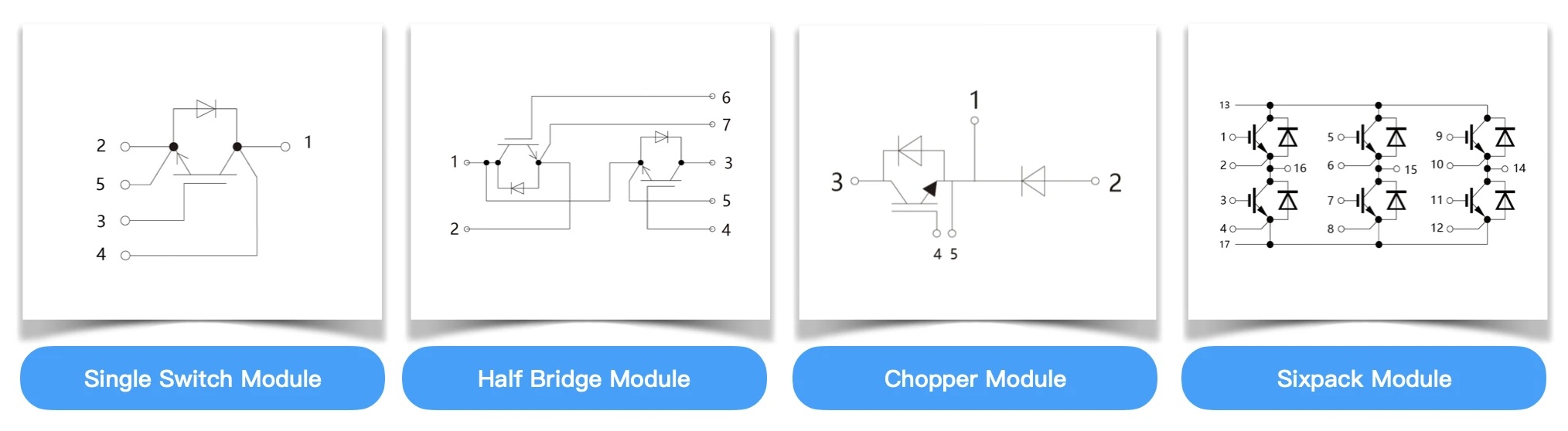
Beyond industrial control applications, the demand for IGBT modules in consumer electronics has rapidly increased as energy-saving and environmental awareness continue to grow. For instance, in induction heating applications, IGBT modules play a crucial role in induction cookers due to their high voltage resistance and high switching frequency. Inverter-based household appliances such as variable-frequency air conditioners and washing machines primarily use intelligent IGBT modules that integrate driving circuits and protection circuits, simplifying circuit design. In lighting applications, IGBT modules are also essential components in high-intensity discharge (HID) lamps, light dimmers, and high-frequency ballast lamps.
Moreover, in the automotive electronics industry, IGBT modules have gradually replaced Darlington transistors as the preferred component in automotive ignition systems. High-current IGBT modules are increasingly used in the main converters of hybrid vehicles.
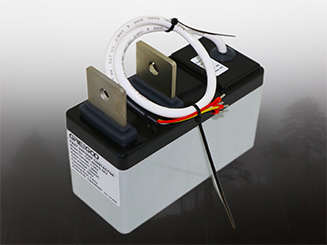
Ultra-fast switching - 5ms opening or closing time - vacuum contactors and vacuum circuit breakers
Greegoo can support customized parameters for specific needs of high speed vacuum contactors and vacuum circuit breakers.
Read More
Sintering process in the chip of solid-state relays is of significant importance.
The use of sintering process in the chip of solid-state relays is of significant importance, primarily for the following reasons
Read More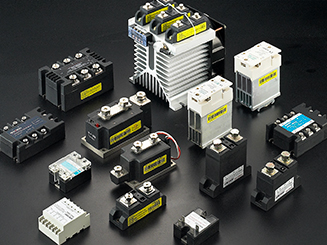
Empowering Operations in Harsh Environments: High-Standard SSR Upgrades Ensure System Stability
Next-Gen SSR: Rugged Reliability for Extreme Industries, 4000V insulation, built-in automatic temperature control and protection.
Read More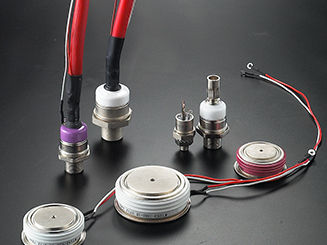
Stud Semiconductors vs. Capsule Semiconductors
Stud and capsule semiconductors are high-power, industrial-grade components designed for heavy-duty applications, featuring robust packaging for superior thermal management and electrical performance.
Read More

We value your privacy
We use cookies to enhance your browsing experience, serve personalized ads or content, and analyze our traffic. By clicking "Accept All", you consent to our use of cookies.
