


Rotating Diode vs. Standard Recovery Diode: Key Difference and Application
The main difference between a rotating diode and a standard recovery diode lies in their applications and performance characteristics:
1. Rotating Diode
- Application: Used in brushless excitation systems of synchronous generators (alternators).
- Function: Converts AC to DC in the exciter rotor circuit to provide field current to the main rotor.
- Characteristics:
- Designed to handle high-speed rotation and mechanical stress.
- High reliability and durability to withstand vibrations and centrifugal forces.
- Typically mounted on the rotating part of the alternator (rotor).
- Works in conjunction with an exciter and main generator to provide a stable DC excitation.
2. Standard Recovery Diode
- Application: General-purpose rectification in power supplies, motor drives, and other electronic circuits.
- Function: Allows current to flow in one direction while blocking it in the other.
- Characteristics:
- Typically has higher reverse recovery time compared to fast recovery or Schottky diodes.
- Used in low to medium-frequency rectification applications.
- Not designed to withstand high mechanical stress or rotation.
Key Differences
| Feature | Rotating Diode | Standard Recovery Diode |
|---|---|---|
| Application | Excitation system of synchronous generators | General rectification in electronics |
| Location | Mounted on the rotating part of the machine | Fixed, mounted on a PCB or heat sink |
| Durability | Designed for mechanical stress, vibration, and centrifugal force | Standard construction for stationary use |
| Speed Consideration | Works in high-speed rotating environments | Used in static applications |
| Recovery Time | Fast recovery to improve generator performance | Slower recovery compared to fast recovery diodes |
A rotating diode is a special type of rectifier diode used in the brushless excitation system of synchronous generators (alternators). It is mounted on the rotating part of the machine (rotor) and plays a crucial role in converting AC (alternating current) to DC (direct current) to provide stable excitation to the generator's main field winding.
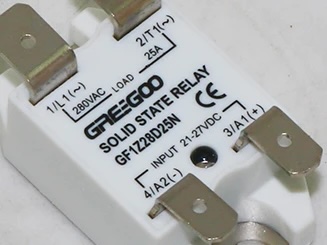
Mini Puck Solid-State Relay: A Compact and Reliable High-Efficiency Switching Solution
Despite its small size, it remains highly reliable. The GF1 uses back-to-back thyristors for switching, which are more durable than traditional triacs.
Read More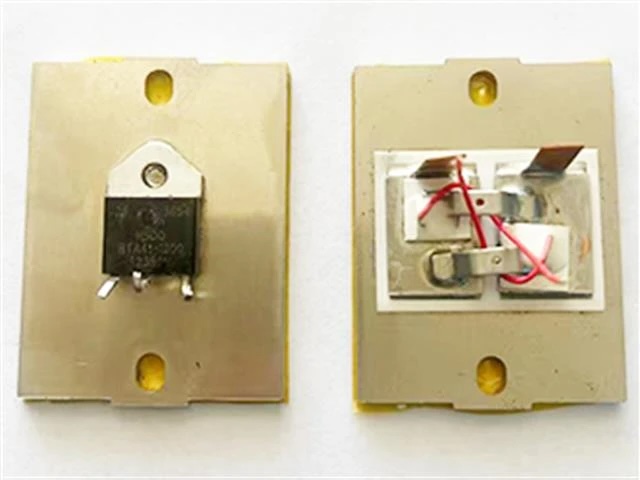
Differences Between TRIAC Output SSR (GD series SSR) and SCR Output SSR (GDH series SSR)
GD and GDH series single phase solid state relay, what's their difference?
Read More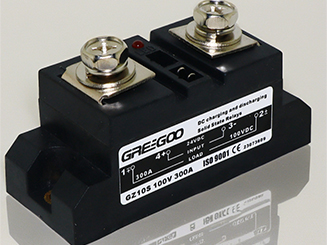
Bidirectional Charging and Discharging SSR: A High-Efficiency and Reliable DC Energy Switching
In applications such as battery charging/discharging and energy storage, energy frequently switches between charging and discharging directions.
Read More
Why the Fast Vacuum Contactor is the Ultimate Bypass Guardian for Power Electronics
5ms closing time, 0ms bounce time, Greegoo's bypass contactor/switch for your grid protection system.
Read More

We value your privacy
We use cookies to enhance your browsing experience, serve personalized ads or content, and analyze our traffic. By clicking "Accept All", you consent to our use of cookies.
