


What is the main difference between 8/20μs and 10/350μs in SPD?
The terms "8/20μs" and "10/350μs" refer to different surge waveforms used to characterize the performance and capability of Surge Protective Devices (SPDs). The numbers represent the time duration (in microseconds) of the surge current waveform and the surge voltage waveform, respectively. The main difference between these waveforms lies in their specific applications and the types of surges they simulate.
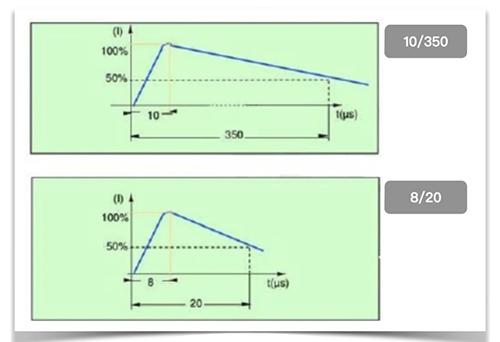
8/20μs Surge Waveform:
- The "8/20μs" waveform represents a surge current with a rise time of 8 microseconds and a decay time of 20 microseconds.
- This waveform is commonly used to simulate fast-rising and short-duration surges, such as those generated by lightning strikes or switching events in the power grid.
- SPDs rated with the 8/20μs waveform are suitable for protection against transient surges caused by lightning strikes and other rapidly occurring events.
10/350μs Surge Waveform:
- The "10/350μs" waveform represents a surge voltage with a rise time of 10 microseconds and a decay time of 350 microseconds.
- This waveform is used to simulate slower-rising and longer-duration surges, often associated with power distribution network switching operations and disturbances.
- SPDs rated with the 10/350μs waveform are appropriate for protection against sustained, longer-duration surges typically found in industrial settings and electrical distribution systems.
In summary, the main difference between 8/20μs and 10/350μs in SPDs lies in the type of surges they simulate and the application scenarios they are designed to protect against:
- 8/20μs: Suitable for protection against fast-rising and short-duration surges, such as lightning strikes and rapid switching events.
- 10/350μs: Suitable for protection against slower-rising and longer-duration surges, often associated with power distribution network switching operations and industrial electrical systems.
When selecting an SPD, it's essential to consider the specific application and the type of surges commonly encountered in the electrical system to ensure the appropriate level of protection for connected devices and equipment.
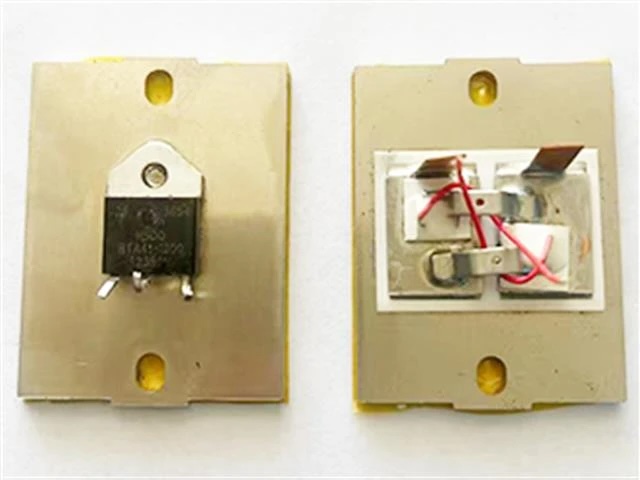
Differences Between TRIAC Output SSR (GD series SSR) and SCR Output SSR (GDH series SSR)
GD and GDH series single phase solid state relay, what's their difference?
Read More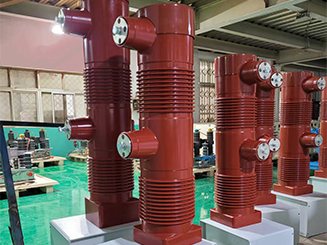
Performance Advantages of Embedded Pole Technology Vacuum Contactor
Performance Advantages of Greegoo's Embedded Pole Technology Vacuum Contactors
Read More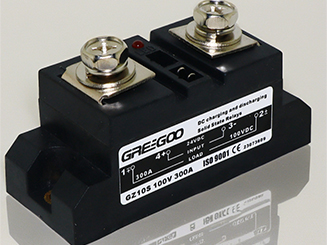
Bidirectional Charging and Discharging SSR: A High-Efficiency and Reliable DC Energy Switching
In applications such as battery charging/discharging and energy storage, energy frequently switches between charging and discharging directions.
Read More
Ultra-fast switching - 5ms opening or closing time - vacuum contactors and vacuum circuit breakers
Greegoo can support customized parameters for specific needs of high speed vacuum contactors and vacuum circuit breakers.
Read More

We value your privacy
We use cookies to enhance your browsing experience, serve personalized ads or content, and analyze our traffic. By clicking "Accept All", you consent to our use of cookies.
