


High current Solid State Relay 500-1600A
Home Products Solid State Relays (AC Switching)Single Phase Solid State RelaysHigh current Solid State Relay 500-1600A
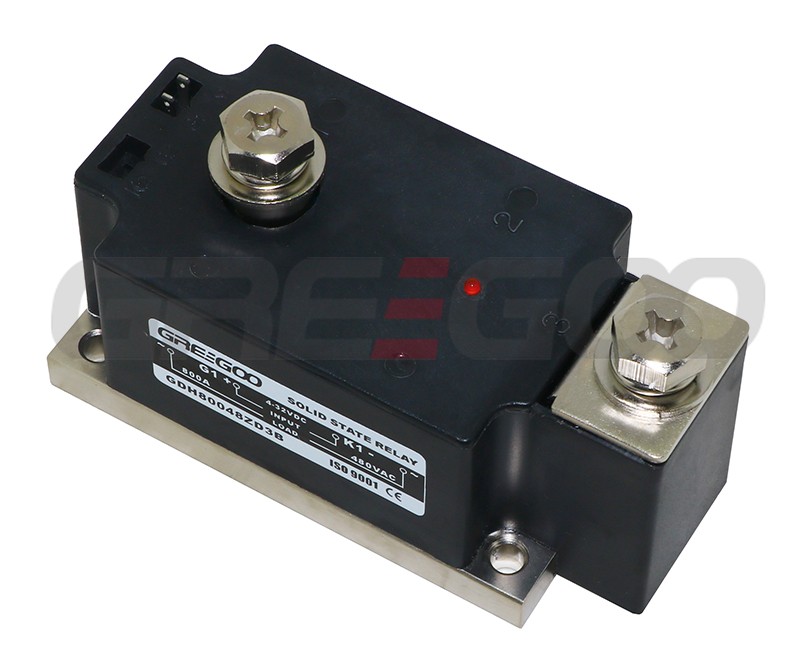
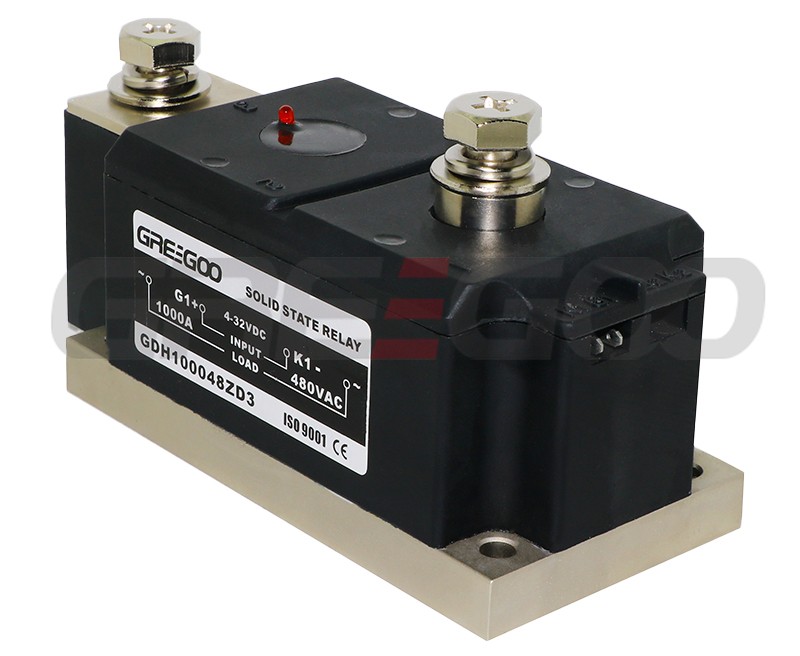
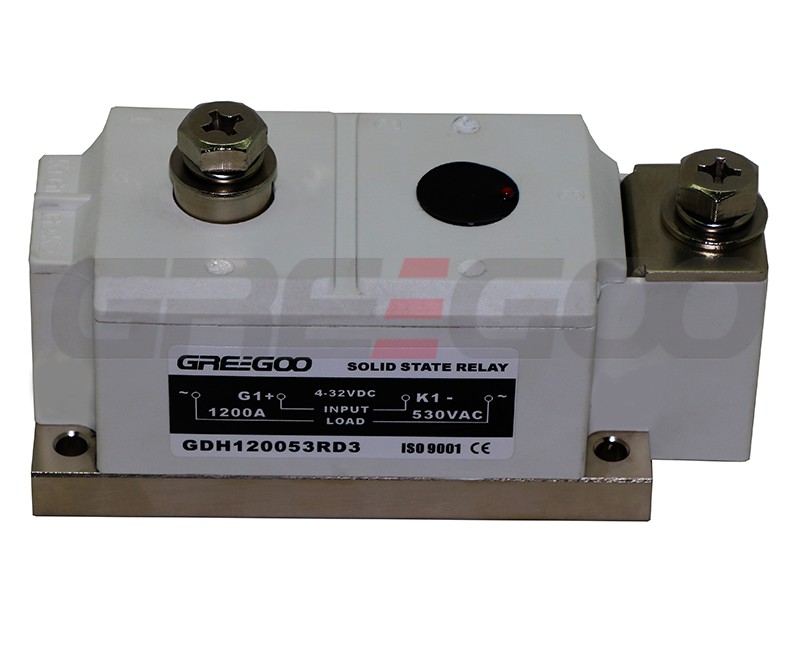
High current Solid State Relay 500-1600A
Single phase Solid State Relay (SCR output)
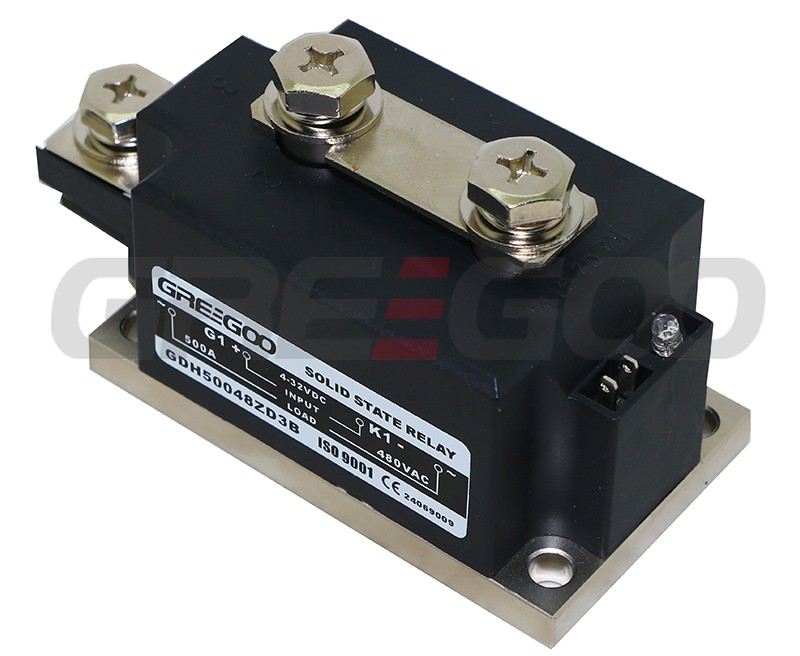
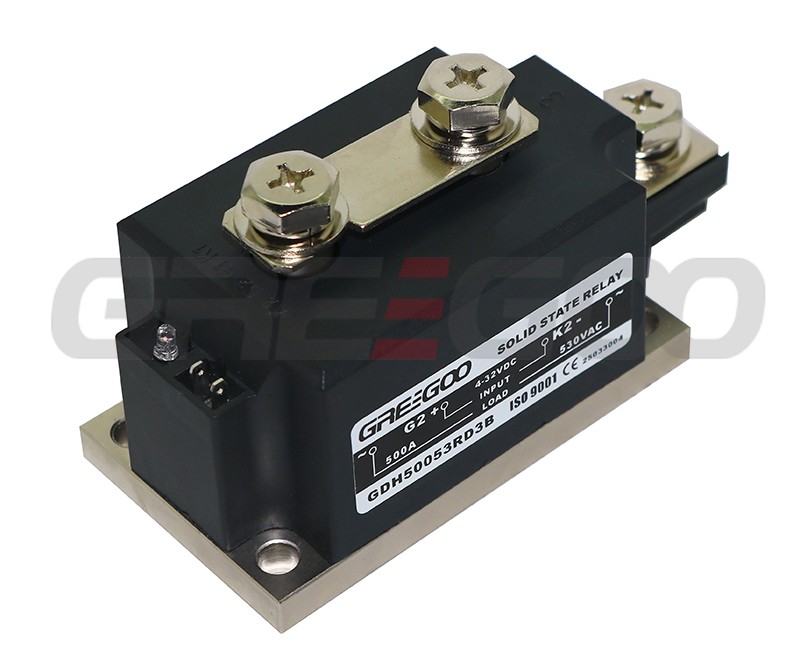
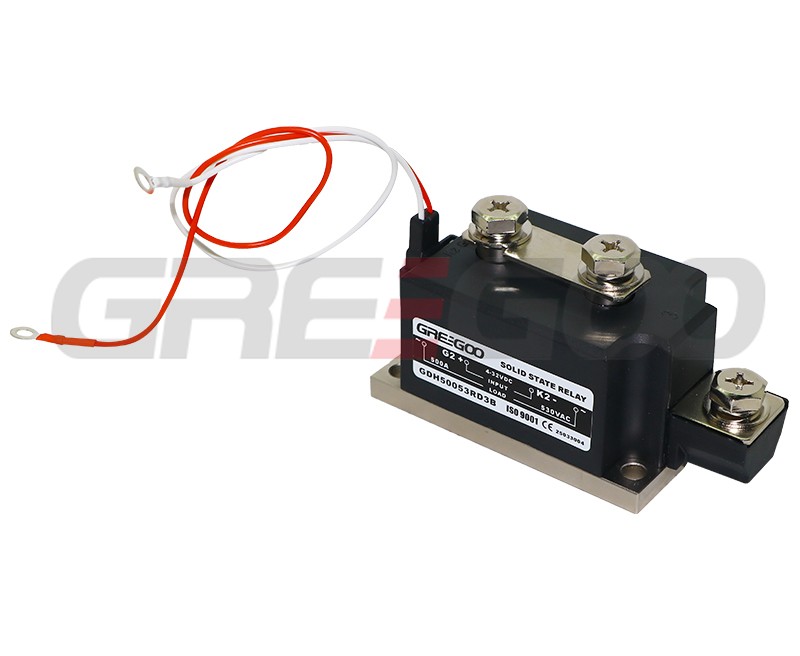
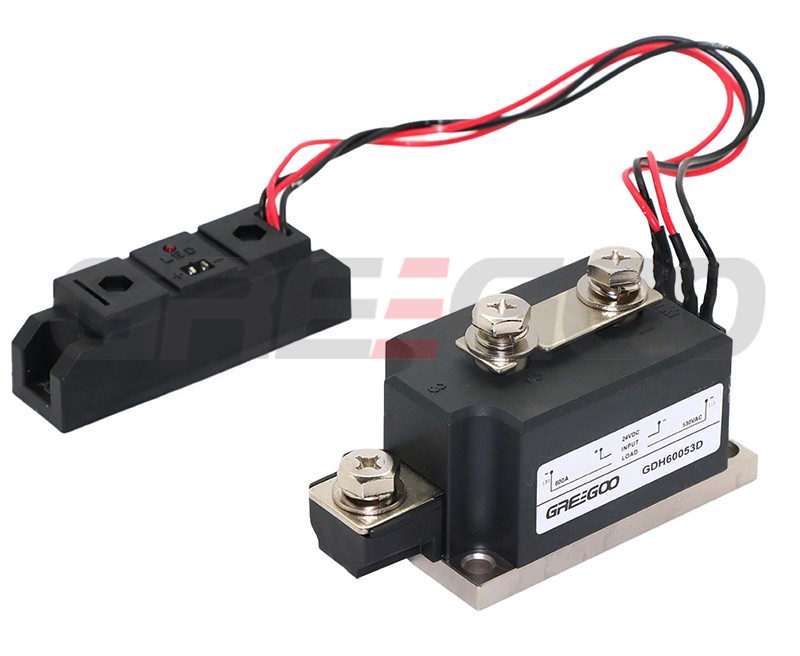
Series GDH are power line relays allowing 500 to 1600 Amps. switching power,with Voltage ratings from 280 to 480 Volts A.C. GDH series is Dual SCR Power Hybrid technology provides highly efficient thermal management for greatly increased cyclic life.
Features
- High performance/low cost circuit design.
- Logic compatible current regulated input.
- 2500 Vrms optical isolation.
- Both “Zero Voltage” & phase controllable “Random Switching” versions.
- High voltage (1200 Vpk) versions for 480 Vrms service.
- LED-indication for control input.
- Control voltage range:4~16 Vdc ,4 to 32 Vdc or 90~280Vac.
| Symbol | Meaning |
| G | Greegoo |
| D | Single phase |
| H | SCR output |
| * | 500-500A, 600-600A, 800-800A, 1000-1000A |
| * | 28-280V,48-480V |
| * | Z-zero control, R-random control |
| * | D1-4-16Vdc, D3-4-32Vdc, A2-90-250Vac |
| For example: | GDH50048ZD3, single phase, SCR output, 500A,480Vac,4-32Vdc control |
| Load Voltage/Type | Control Voltage | Rated operational current | |||||
| 500Amp | 600 Amp | 800 Amp | 1000 Amp | 1200 Amp | 1600 Amp | ||
| 480 VAC “Zero Voltage” | 4~32 Vdc | GDH50048ZD3 | GDH60048ZD3 | GDH80048ZD3 | GDH100048ZD3 | GDH120048ZD3 | GDH160048ZD3 |
| 480 VAC “Random Switching” | 4~32 Vdc | GDH50048RD3 | GDH60048RD3 | GDH80048RD3 | GDH100048RD3 | GDH120048RD3 | GDH160048RD3 |
| 530 VAC “Zero Voltage” | 4~32 Vdc | GDH50053ZD3 | GDH60053ZD3 | GDH80053ZD3 | GDH100053ZD3 | GDH120053ZD3 | GDH160053ZD3 |
| 530 VAC “Random Switching” | 4~32 Vdc | GDH50053RD3 | GDH60053RD3 | GDH80053RD3 | GDH100053RD3 | GDH120053RD3 | GDH160053RD3 |
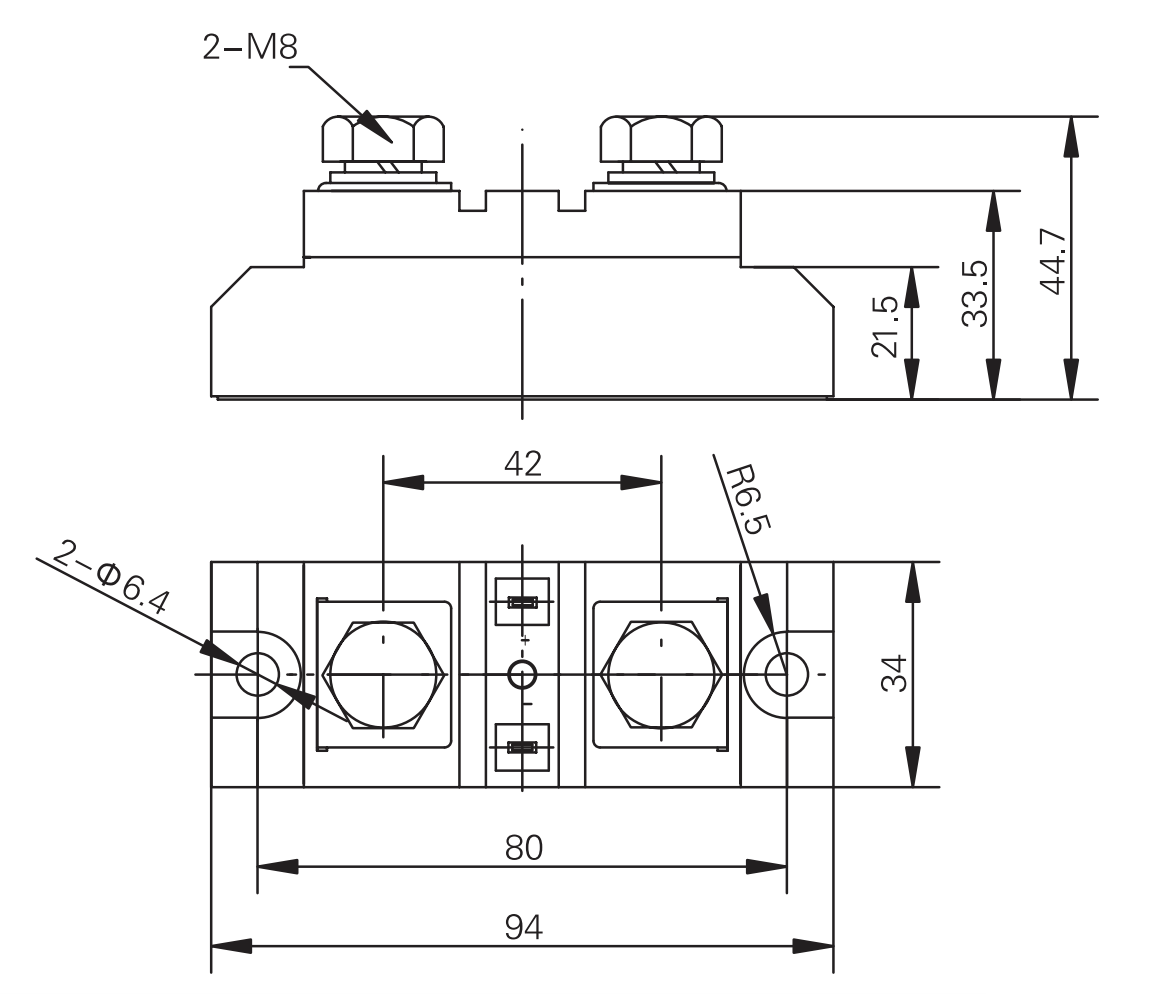
The main differences between Solid State Relays (SSR) and Electromechanical Relays (EMR) lie in their structure and performance. SSRs have no mechanical contacts and use semiconductor devices for switching, offering longer lifespan, faster switching speeds, and noiseless operation, making them suitable for high-frequency operations and harsh environments. EMRs rely on electromagnetic coils to drive mechanical contacts, resulting in slower switching speeds, shorter lifespan, and noise during operation, and they are more sensitive to vibration and shock. SSRs consume less power and are ideal for applications requiring frequent switching, such as heating and motor control, while EMRs are suitable for general switching applications, especially where electrical isolation is needed.
A freewheeling diode, also known as a flyback diode, is connected in parallel with an inductive load (e.g., motor, inductor, or transformer) in electronic circuits to provide a path for the current when the switching device (e.g., transistor, IGBT, or thyristor) turns off. This prevents voltage spikes caused by the inductive load’s stored energy, protecting the circuit and reducing electromagnetic interference (EMI).
A margin should be left when selecting the voltage and current of the solid state relay.
For resistive load: the current is selected according to 2.5~4 times the load current, and the voltage is selected according to 2~2.5 times the load power. Inductive load: current is selected according to 3-7 times load current, voltage is selected according to 2.5-3 times load voltage.
According to the relationship between load current and ambient temperature, when the ambient temperature is high or heat dissipation conditions are not good, the current capacity of the solid state relay should be increased accordingly.
In order to prevent the product from short-circuiting during use, it is necessary to connect a fast circuit breaker or a fast fuse in series with the product in the load circuit.
For inductive loads, a freewheeling diode must be connected to both ends of the load, and a varistor must be connected to the output end (the varistor (MOV) is selected according to 1~1.5 times of the power supply voltage) to prevent the high voltage generated during switching from damaging the solid-state switch.
When the product is installed, it is required that the contact surface between the heatsink and the product must be flat and clean, and a layer of thermally conductive silicone grease is applied to its surface, and then finally the screws set with flat washers and Spring washersare tightened symmetrically to fix.
Need more information?
Contact us to request pricing, availability and customization options.
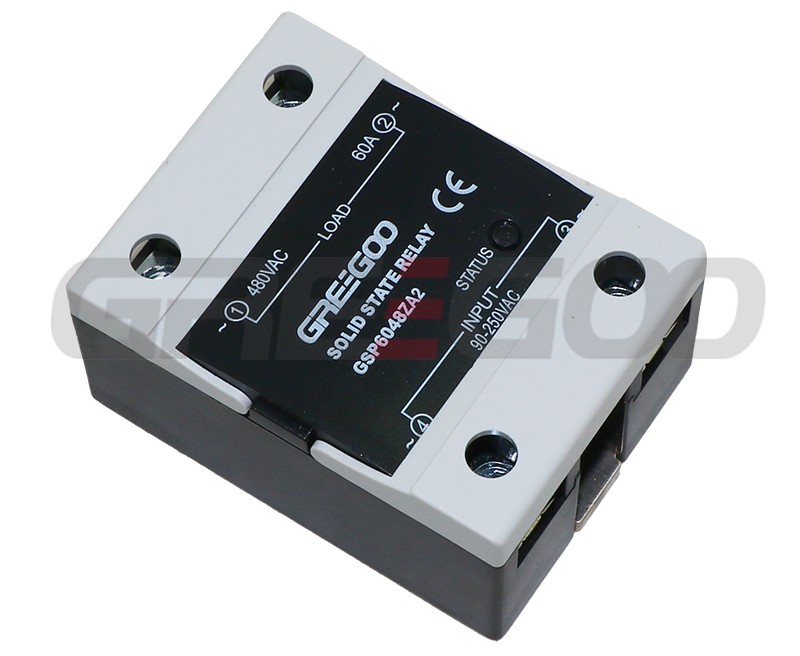
Dc to Ac and Ac to Ac Solid state relays
10A to 100A, single phase, three phase, dc to ac, dc to dc, ac to ac SSR.
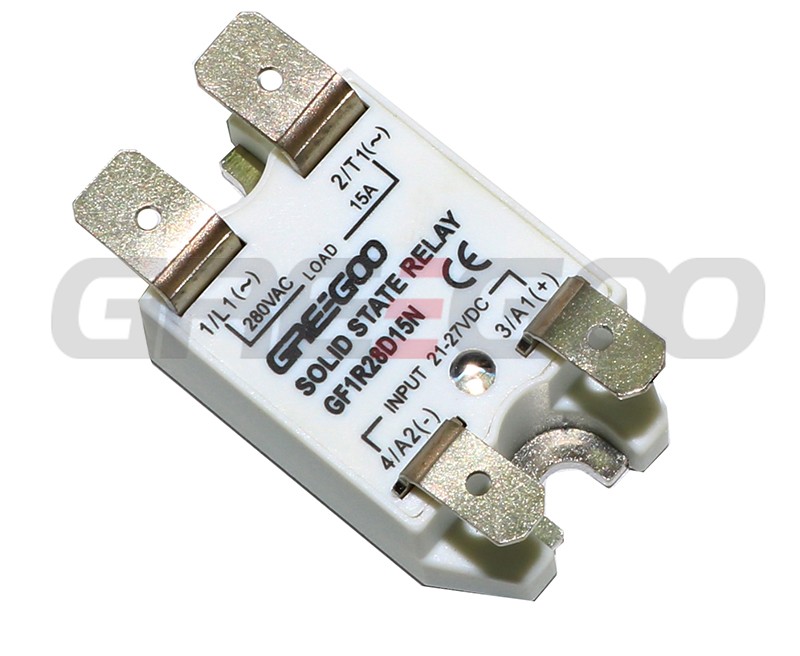
Compact FASTON terminals ac switching solid state relay
1-Phase, 15A and 25A, 230VAC, FASTON terminals connect
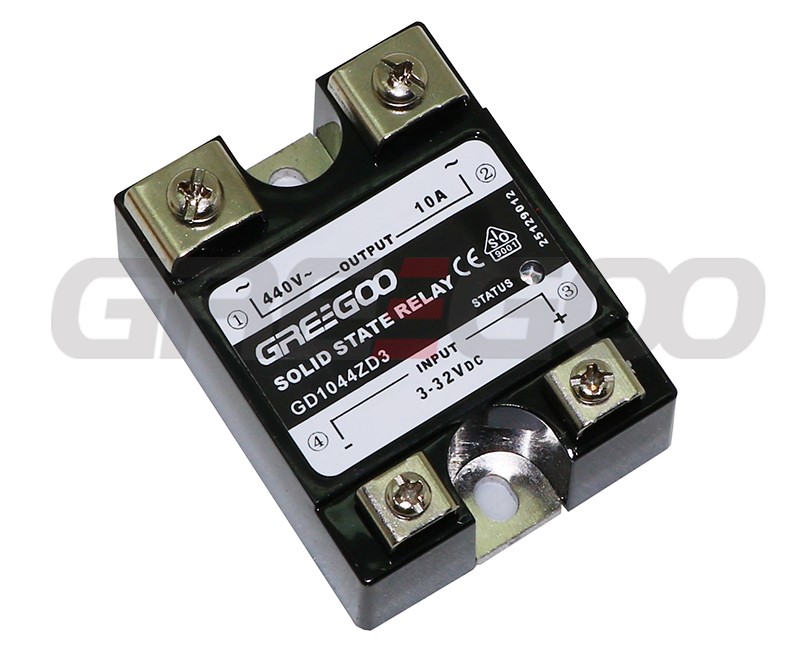
10A 25A 40A Solid State Relay Single Phase Economical Type
10 to 40A SSR, single phase, triacs output, economical type.

Solid state relay with diagnostic
40A 220V built-in RC snubber circuit, diagnostic over temperature and load open-circuit


We value your privacy
We use cookies to enhance your browsing experience, serve personalized ads or content, and analyze our traffic. By clicking "Accept All", you consent to our use of cookies.
